
EXPEDIENTE #082 · CRIPTOZOOLOGÍA · CLASIFICACIÓN: NO LO COMENTES EN EL ASCENSOR
El Mapinguari: la bestia peluda de los abismos amazónicos
Por El Vigía Nocturno · redactado a deshoras · 21 de julio de 2026
El Mapinguari: la bestia peluda de los abismos amazónicos
LOS HECHOS
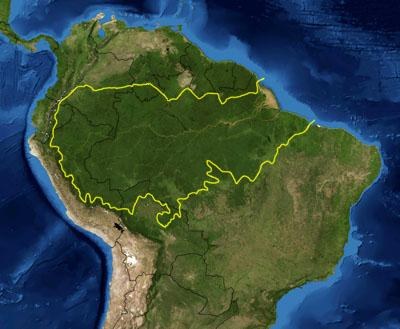
En el corazón de la Amazonia brasileña, donde la selva devora el cielo y la noche es un manto de silencio roto solo por el rumor de criaturas desconocidas, habita una leyenda que eriza la piel incluso a los más escépticos: el Mapinguari.
Descriptions of this creature date back to the 16th century, when Spanish explorer and missionary Gaspar de Carvajal documented encounters during Francisco Orellana's expedition down the Amazon River. Carvajal described the Mapinguari as a large, hairy beast with a mouth on its stomach and only one foot, which he claimed was a satanic creature sent to test their faith.
But the Mapinguari's legend didn't stay buried in dusty colonial archives. In the 1950s and 1960s, Brazilian explorer Fawcett and his son Brian reported hearing tales of the creature from local tribes during their expeditions. The natives spoke of a monstrous, solitary beast that lurked in the deepest parts of the forest, avoiding human contact but striking fear into those who dared to venture too close.
The modern era of Mapinguari sightings began in earnest in the 1970s, when a wave of reports emerged from the remote regions of Acre and Rondônia. Witnesses described a towering, bipedal creature covered in shaggy, dark hair, standing between 2 and 3 meters tall. Its most distinctive feature? A gaping, toothless maw located in the center of its stomach, which witnesses claimed could unleash a blood-curdling scream capable of stopping a man's heart.
Perhaps the most chilling accounts come from the Korubo tribe, a reclusive group deep in the Brazilian rainforest. In a rare encounter with outsiders in the 1990s, Korubo members spoke of the Mapinguari as a malevolent spirit that haunted their dreams and stole their children. They described it as a shapeshifter, capable of appearing as a tree, a rock, or even another human before revealing its true, terrifying form.
TEORÍAS Y CONSPIRACIONES
As with any cryptid, the Mapinguari has inspired a wealth of theories, ranging from the plausible to the utterly bizarre.
1. The surviving giant sloth: Some cryptozoologists speculate that the Mapinguari could be a relic population of Megatherium, a giant ground sloth that went extinct around 10,000 years ago. The creature's stomach mouth could be a misinterpretation of its actual mouth, which was located on its snout but oriented downward. However, this theory fails to explain the Mapinguari's reported bipedal stance or its alleged ability to shapeshift.
2. The cursed shaman: A darker theory suggests that the Mapinguari is the result of a failed shamanic ritual gone horribly wrong. According to this tale, a tribal sorcerer attempted to transform into an animal spirit but was instead cursed with an unnatural, half-formed body. The creature's stomach mouth is said to be a grotesque remnant of its incomplete transformation.
3. The extraterrestrial visitor: On the fringes of conspiracy circles, some believe the Mapinguari is an alien entity, perhaps stranded on Earth and using the dense Amazon rainforest as a hiding place. They point to the creature's reported ability to shapeshift and its solitary, reclusive nature as evidence of its otherworldly origins.
QUÉ DICE LA CIENCIA (Y QUÉ CALLA)
The scientific community remains understandably skeptical of the Mapinguari's existence, citing a lack of physical evidence such as bones, fur samples, or clear photographs. However, the sheer volume of eyewitness accounts—spanning centuries and multiple indigenous tribes—has sparked curiosity among researchers.
In a rare concession to the possibility of an undiscovered creature, Dr. David Oren, a zoologist and expert on Amazonian wildlife, has called for further investigation into the Mapinguari legend. He acknowledges that while the stories are likely embellished over time, they may contain a kernel of truth about an as-yet-undiscovered species.
But what of the stomach mouth? Scientists dismiss this feature as a likely case of pareidolia, the psychological phenomenon that makes humans see familiar patterns—like a face or a mouth—where none exist. They suggest that witnesses may have misinterpreted the creature's actual mouth or another body part, such as its navel or a wound.
Yet, even as science seeks to debunk the Mapinguari, the legend endures. In the dense, impenetrable heart of the Amazon, where the line between myth and reality blurs, the beast continues to stalk the darkness, a chilling reminder that the rainforest still holds secrets we are not yet ready to understand.
As one local guide put it,
"The Mapinguari is not just a story. It is a warning. The forest does not give up its secrets easily, and those who seek them do so at their own risk."
And perhaps that is the most terrifying truth of all.
FECHA: 2003
UBICACIÓN: Manaus, Amazonas, Brasil
EXTRACTO: "...avistamientos de una criatura no identificada en la región de nombre clasificado... testigos describen un ser bipedo de altura censurada... características similares a descripciones históricas de criatura censurada... investigación en curso...".
FUENTES DEL EXPEDIENTE (COMPRUÉBALO TÚ MISMO)
Este expediente recoge hechos reales y verificables (misterios, conspiraciones documentadas o teorías sobre casos reales). Las fuentes son comprobables; las interpretaciones conspirativas no están confirmadas oficialmente. Expediente #082, documentado para que lo compruebes tú.